
Updated: March 2026
How Music Supervisors and Editors Evaluate a Track Before They Use It
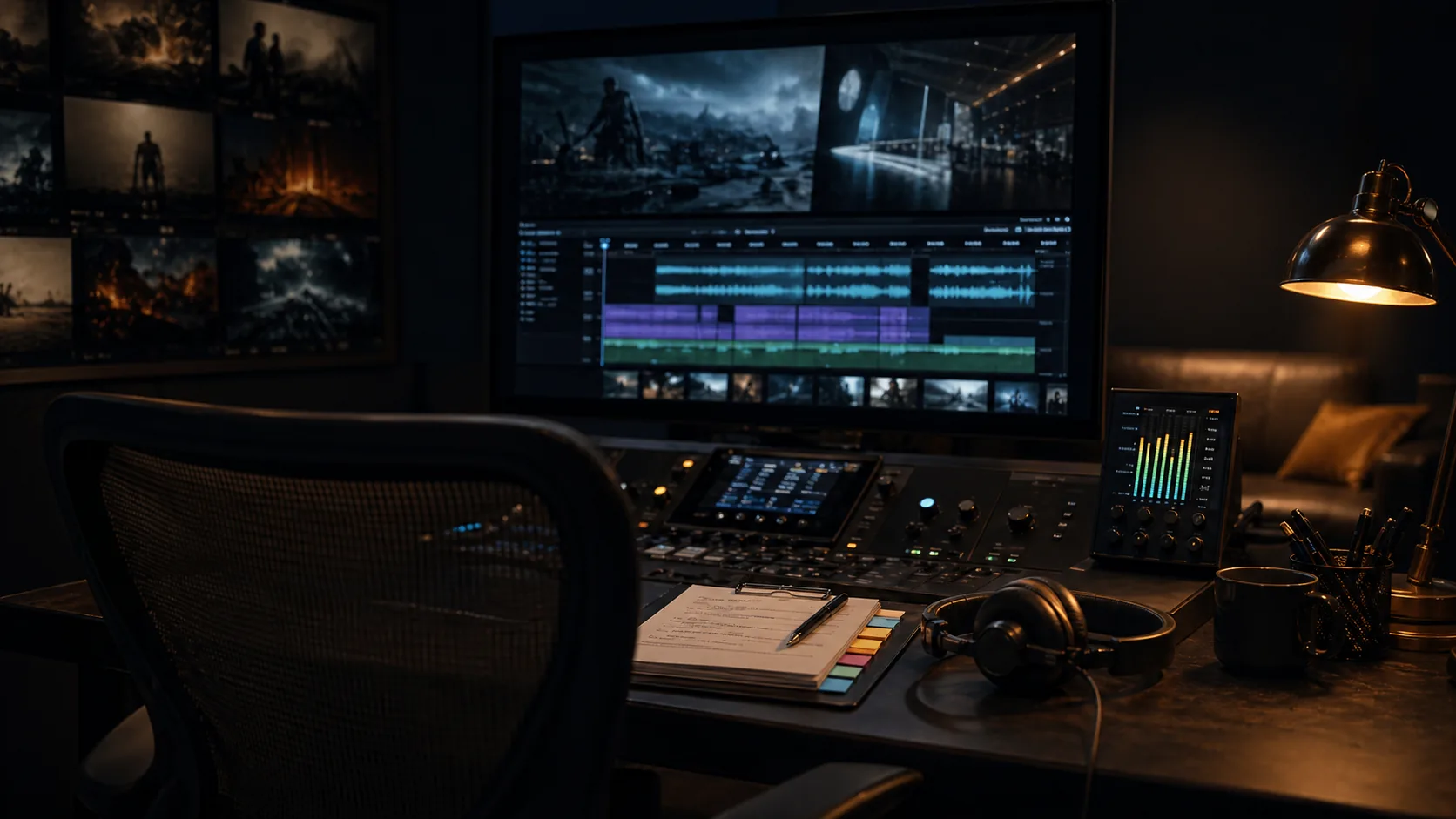
Most buyers say they want a good track. Professionals usually mean something narrower. They want a track that solves multiple problems at once: emotional fit, usable structure, clean edit points, rights confidence, and enough character to feel intentional without overpowering the cut.
That is why a track can sound impressive on its own and still fail in the real decision process. Music supervisors and editors are not only asking whether the cue is strong. They are asking whether it is functional, defensible, and worth committing the timeline to.
If you want the brief-writing version of this process, read How to Write a Trailer Music Brief That Actually Gets the Right Track. This article focuses on how professionals usually judge the track itself.
1. Emotional Accuracy
The first question is not usually whether the track is objectively good. It is whether it tells the truth about the scene, brand, or format. A strong track with the wrong emotional promise wastes time because it makes every cut decision more confusing.
Professionals listen for whether the cue fits the narrative job. Is it building dread, authority, urgency, release, wonder, or forward pressure? If the emotional lane is blurry, the track rarely survives long.
2. Opening Usefulness
A lot of tracks win late and lose early. They have a good climax but a weak entrance. Editors care about the first few seconds because that is where the cut starts negotiating tone, pace, and audience expectation. If the opening is vague, the track creates more work than it saves.
This is one reason countdown and tension cues often perform well in trailer-style work. They arrive with immediate editorial information instead of waiting too long to become useful.
3. Structure and Editability
Editors listen for shape. Can the track support reveals, copy beats, transitions, drop-ins, act turns, and a satisfying payoff? Are there natural moments to cut around? Is the energy curve predictable enough to work with but not so flat that the piece becomes lifeless?
A track does not need to be simple. It does need to be cooperative.
4. Sonic Identity
Good buyers also listen for what makes a cue memorable. Not loud. Memorable. That might be a pulse pattern, a signature texture, a specific kind of downbeat, or a tonal color that separates the track from generic library music.
This matters more than people admit, especially for brand work and repeated channel formats. If the cue feels replaceable, it usually is.
5. Rights Confidence
Music supervisors and experienced editors do not treat rights as an afterthought. A track becomes far less attractive if the licensing path is vague, the proof is weak, or the future use case is hard to predict. Nobody wants to sell in a track to the client and then discover the rights are too narrow when the campaign expands.
That is why buyers who work professionally tend to value music that comes with clearer terms and a licensing model they can explain under pressure.
6. Delivery Practicality
Professionals also ask boring but important questions: can I get the file cleanly, can the client understand the rights, can I revisit this track later, and can I trust the provider if a dispute appears? Tracks lose deals all the time because the workflow feels fragile, not because the music itself is bad.
What This Means During Search
For buyers judging tracks by edit function, the catalog is easiest to use when the cue needs to read clearly on the timeline. The catalog categories tend to map well to real editorial needs like urgency, scale, dread, hybrid impact, and countdown tension. That makes the evaluation faster because the music is easier to judge by function.
On the rights side, Epikton’s Universal License also reduces one layer of hesitation. The track can be judged more on fit and workflow value instead of on whether the rights model will collapse as soon as the use case grows.
If the project needs a clear functional lane, collections like Ticking-Clock Music, Hybrid Music, and Action Music are useful precisely because they already suggest editorial purpose.
The Best Test
A professional track survives two questions at once: does it improve the cut, and can everyone involved keep trusting it after the cut changes, expands, and gets handed to someone else? When both answers are yes, the track is not just good. It is usable.
Use the search below like a first pass on the timeline. Try tension, horror, hybrid, epic, or action, then judge the results by whether they would survive review.