
Updated: March 2026
How to Write a Trailer Music Brief That Actually Gets the Right Track
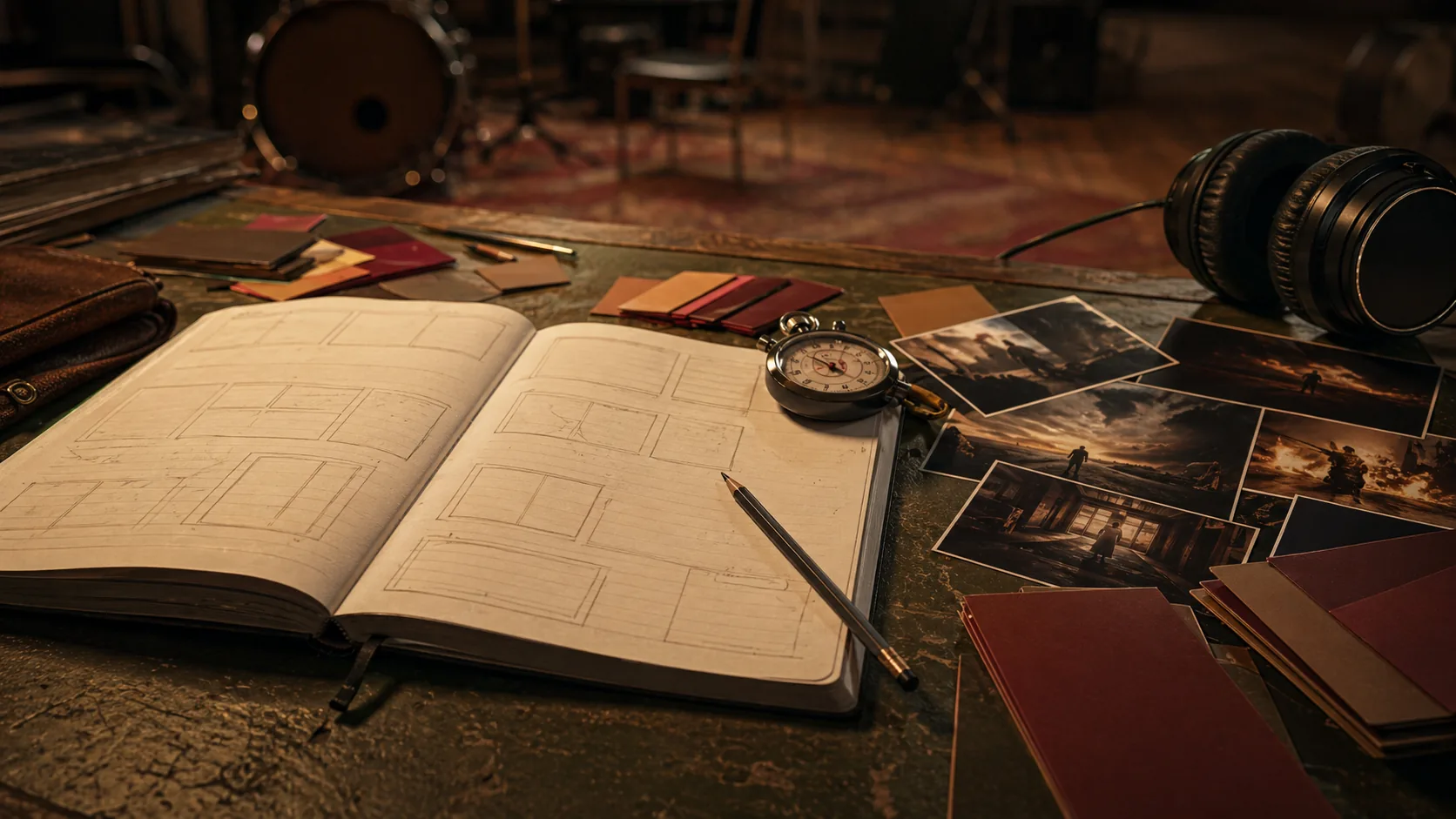
A weak trailer music brief usually sounds like this: cinematic, emotional, modern, maybe epic, maybe tense, not too much, but still powerful. That sounds descriptive until you actually have to find the track. Then it becomes obvious that almost none of it helps. The editor still does not know where the cue should turn, the composer still does not know what not to do, and the producer still cannot explain why every option feels slightly wrong.
A good brief saves time because it gives shape to the edit before the track is chosen. It does not need legal language or music-school jargon. It needs clear editorial intent.
If you need the broader beginner version first, A Quick Guide to Selecting Trailer Music is still useful. This article is for the point where broad advice is no longer enough.
What a Useful Brief Must Answer
A trailer music brief should answer seven things clearly: format, emotional promise, pacing curve, sound palette, edit moments, no-go territory, and rights needs. If one of those is vague, the music search gets slower and more subjective than it needs to be.
Start With the Format, Not the Genre
A teaser, a full trailer, a thirty-second spot, and a product launch cut do not need the same musical behavior. This is the first place many briefs fail. They ask for epic trailer music before they define what kind of trailer they are actually making.
If the format is unclear, the track search becomes a style hunt instead of an editorial decision. That is why trailers, teasers, and TV spots need to be separated at the start of the brief, not halfway through the search.
Define the Emotional Promise
The most useful briefs do not begin with genre tags. They begin with the emotional promise of the piece. What should the audience feel in the first ten seconds? What should they feel by the end? Tension, dread, lift, propulsion, awe, urgency, restraint, and collapse are all more useful than simply saying cinematic.
This is also where brand identity matters. If the broader series or channel already has a sonic lane, the brief should say so. Otherwise each new edit starts from zero and the brand ends up sounding accidental. Music identity is not a separate topic from brief-writing. It is one of the inputs.
Describe the Energy Curve
This is the part many non-musical briefs miss completely. A good brief explains how the energy should move.
- slow-burn tension into hard lift
- immediate impact, then sustained drive
- controlled restraint until the final reveal
- countdown pressure that never fully releases
Those are actionable. They tell the music search what kind of structure to look for, not just what mood board to imitate. If pacing is your weak point, the pacing guide is the best companion reference.
Give a Sound Palette, Not a Vibe Cloud
Vague references like dark, modern, premium, and cinematic are not enough on their own. A useful sound palette says what the track should be built from.
- ticking clock pulses and tight percussion
- hybrid impacts with braams and low synth movement
- heroic orchestral lift with choir and trailer drums
- minimal pulse with sharp edit points and no melodic lead
That is the difference between searching randomly and searching like an editor with a target.
State the No-Go Territory
This is where time gets saved. Most teams are better at describing what they want than what they reject, but no-go notes often narrow the field faster than positive notes.
- no heroic uplift
- no vocal lead
- no organic drums
- no huge drop in the first half
- no sentimental piano ending
One sentence of exclusion can save an hour of wrong previews.
Mark the Edit Moments
A trailer brief gets much stronger when it mentions actual edit events. For example:
- title card reveal at 0:19
- hard cut to chaos at 0:33
- dialogue drop-out before the final rise
- button ending on logo at 0:58
Music does not exist separately from the cut. The more clearly the brief respects that, the better the fit.
Do Not Forget the Rights Side
A music brief is not only creative. It is operational. If the piece may later be used on YouTube, paid social, client decks, broadcast cutdowns, or product pages, that should be stated early. Otherwise the team may pick the perfect track creatively and the wrong one legally.
This matters especially when a trailer-style asset begins as social content and then expands. If that kind of scope change is likely, the brief should say so before the search begins.
A Simple Brief Template
- Format: teaser, trailer, TV spot, product launch, promo
- Emotional promise: dread, pressure, awe, lift, urgency
- Energy curve: slow burn, hard rise, final hit, restrained ending
- Sound palette: hybrid, ticking clock, orchestral, minimal pulse, choir, no vocals
- Edit moments: key cuts, reveals, logos, title cards, dialogue windows
- No-go notes: what to avoid
- Rights scope: where the finished piece may be published or reused
Where the Catalog Helps
The catalog becomes most useful once the brief already has a clear lane. If the project needs pressure and countdown motion, start in Ticking-Clock Music. If it needs modern trailer force, Hybrid Music is a better first pass. If it needs scale and lift, Epic Music is the cleaner lane. That is not about forcing the catalog into every project. It is about matching search behavior to editorial intent.
A good trailer music brief does not make the decision for you. It removes the kind of vagueness that makes every wrong track sound almost right. Once the format, emotional promise, pacing, palette, exclusions, edit moments, and rights scope are clear, the right track usually stops hiding.
Use the search below with the same language you would put in the brief: emotion, pacing, sound palette, key edit moment, or no-vocal requirement.