
Updated: May 2026
Horror Game Trailer Music: How to Build Dread Without Hiding Gameplay
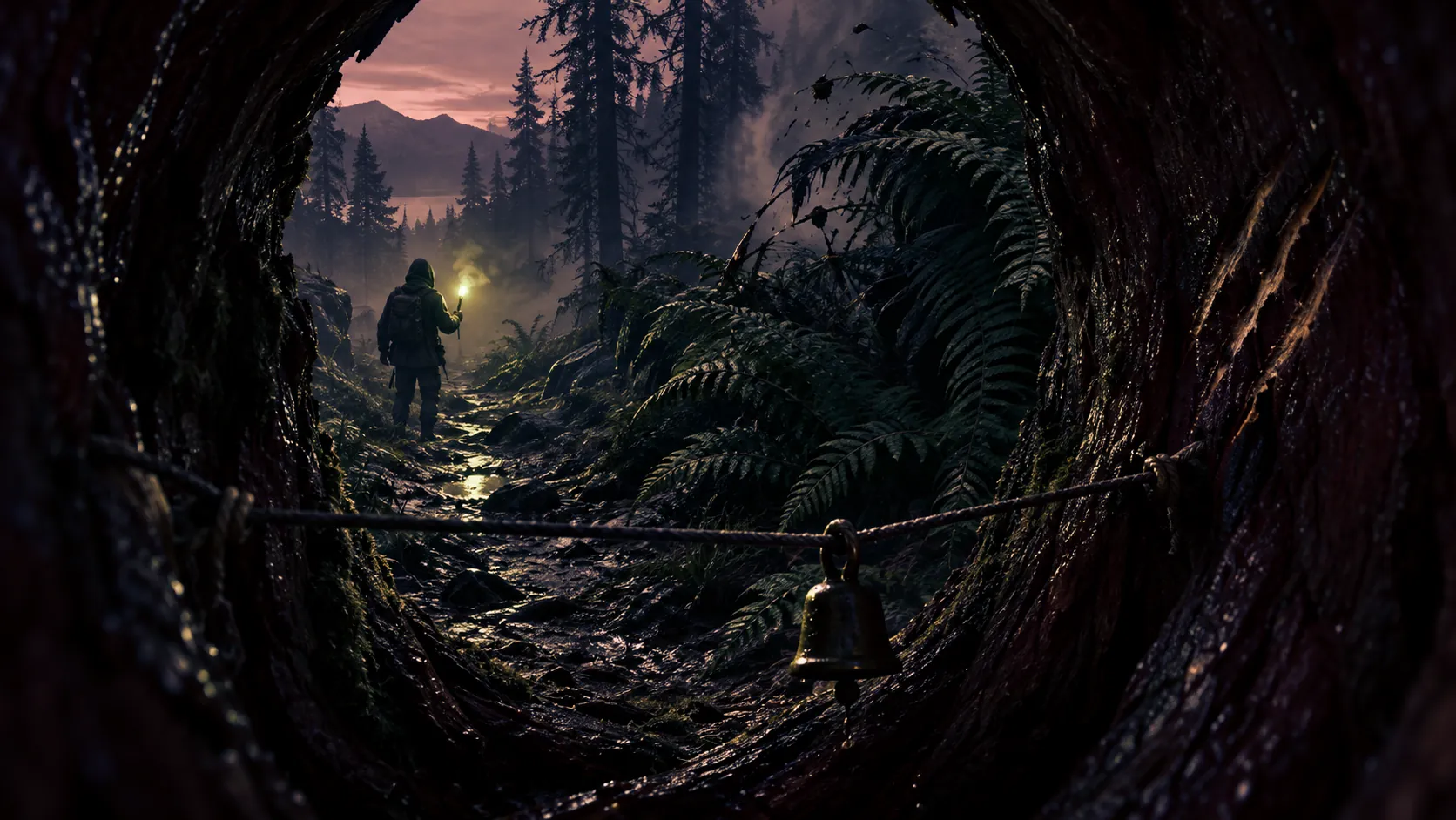
Horror game trailer music has a strange job.
It has to make the player feel unsafe, but it cannot hide the game.
If the track turns every shot into a wall of drones, risers, impacts, and distorted noise, the trailer may feel intense while telling the viewer almost nothing about what they will actually play.
That is a common indie horror problem. The game may have a strong idea: limited light, unreliable sound, hiding from something that learns, a haunted worksite, a ritual gone wrong, a VHS camera that sees too much.
Then the trailer gets buried under generic fear language. It becomes dark, loud, and vague.
The better goal is dread with evidence. The music should make the footage more dangerous while the viewer still understands the place, the threat, the player action, and the reason to wishlist, download, or back the game.
Start With The Horror Subtype
Do not search for “horror music” first.
Name the type of fear first. In survival horror, that usually means pressure, scarcity, and consequence. The music can stay restrained while the edit shows low ammo, locked doors, limited saves, and the choice to run or fight.
Psychological horror is different. It needs instability: uneasy textures, blurred tonality, small pulses, broken warmth, and transitions that make rooms or memories feel wrong. If the game is about doubting perception, the track should not sound like a simple monster chase from second one.
Creature horror can be more physical: breath, pursuit, heavy impacts, low brass or synth pressure, and sudden gaps before contact.
Found-footage horror often wants the opposite kind of attention: room tone, tape-like texture, low drones, and small sounds that feel too close to the microphone. Co-op horror needs playable panic, with a chase pulse, a rising clock, and space for voice chat or team failure. Cosmic horror needs scale and dread, but it should still show the verbs of the game, not only huge abstract darkness.
Write one sentence before searching: “The player should be afraid of ____.”
Being seen. Being heard. Running out of light. Opening the wrong door. Trusting the wrong memory. Losing the team. That sentence will filter better than a pile of mood words.
Dread Usually Beats Constant Shock
Shock is a spike. Dread is a slope.
A trailer built only from spikes can feel exciting for a few seconds, then numb. The viewer stops believing the edit because every door, cut, logo, and title card is treated like the biggest scare in the campaign.
A more useful horror trailer has pressure changes. Try this dread-vs-shock timeline for a 60-second edit:
| Time | Dread job | Shock job | Gameplay evidence |
|---|---|---|---|
| 0-10s | Establish place and wrongness | Use little or none | Show camera view, movement, HUD, light, door, map, or player hand |
| 10-25s | Add pulse or texture as the rule appears | One controlled hit if the rule breaks | Show hiding, listening, inventory, puzzle, or exploration |
| 25-45s | Increase pressure and shorten breath | Use impacts to mark consequences | Show chase, resource loss, enemy behavior, or failed choice |
| 45-55s | Let tension peak without masking the image | One reveal, reversal, or hard cut | Show the threat and the player response |
| 55-60s | Leave a final unease | A sting or silence, not both every time | End on title, wishlist ask, demo date, or final image |
This is not a formula.
It is a way to stop the music from screaming over every useful moment. For broader structure work, the trailer pacing guide can help you map the trailer before you pick the final cue.
For many indie horror trailers, smaller music is the stronger choice. A thin pulse under a flashlight search can create more belief than a giant hit on every cut. A quiet drone during inventory panic can make the player feel trapped without stealing attention from the UI. Save the biggest sound for the moment when the footage has earned it.
Do Not Let Music Hide The Gameplay Loop
Storefront trailers are a useful reminder here: the viewer needs to understand the game before the atmosphere can sell it. For horror developers, the takeaway is simple: mood is not enough for the first trailer.
If the game is about hiding under desks, show the hiding. If it is about listening through walls, show the player reacting to audio. If the core tension is battery management, show the light failing at a bad time. If the threat changes patrol paths, show the player learning and then being punished. The music should increase the danger of those actions, not replace them with smoke.
A simple test works: mute the trailer. Can a player still understand the core loop?
Then unmute it. Does the music make that loop feel more dangerous, more specific, or more urgent? If it only makes the trailer louder, keep looking. The guide to selecting trailer music is useful, but horror adds one extra demand: the fear must point toward playable action.
Keep Music And Sound Design From Fighting
Horror games already have important sound: footsteps, breath, doors, alarms, radio noise, UI clicks, whispers, creature calls, ambience, inventory sounds, heartbeat, and silence. If the music occupies every frequency, the trailer loses the details that make the game feel specific.
Use this conflict checklist before locking the mix:
- Can the viewer hear the sound that explains the mechanic, such as a detector, radio, camera, flashlight, or monster cue?
- Does the low drone leave room for footsteps, doors, and creature movement?
- Are impacts landing after important sound-design moments instead of flattening them?
- Can any voice line, objective text, sound cue, or UI confirmation be understood?
- Does silence appear at least once as a deliberate threat, not only as a gap between loud hits?
If the sound design is part of the game’s promise, do not make it compete for oxygen. Pick a track with useful spaces, edit around those spaces, and let the game’s own sound prove that the trailer belongs to your project.
Write A Better Brief Before You Search
Before searching, describe the trailer in terms of dread, chase pulse, low drones, restrained impacts, dark cinematic tension, and the gameplay moments that must remain audible.
Use the store search with a brief, not a mood cloud.
Try survival horror dread, found footage drone, chase pulse, low drones, restrained impacts, ticking tension, dark cinematic trailer, or creature reveal with space for sound design.
Search Horror Trailer Music
A weak brief says: “Need dark, creepy, epic horror trailer music.”
That gives you too many wrong options. It does not tell the track what kind of fear, pacing, or space the game needs.
A better survival horror brief is more concrete: “First-person survival horror trailer. Opens with quiet exploration and limited flashlight battery, builds into a hallway chase, ends on a creature reveal. Needs low drone, tense pulse, controlled impacts, and room for breath, door sounds, and a warning beep.”
For psychological horror, the brief might be quieter: “Slow trailer for a narrative horror game about memory distortion. Needs uneasy texture, small pulses, unstable tonal shifts, and a final swell without action-trailer drums. Gameplay must show room changes, object interaction, and dialogue fragments.”
For co-op horror, the brief should leave room for people reacting: “Four-player extraction horror trailer. Starts with cautious team movement, shifts into alarm state, then a sprint to the exit. Needs chase rhythm, ticking urgency, short breathers for voice chat, and one clear final hit.”
The full guide to writing a trailer music brief can help turn this into a repeatable process.
Use Before And After Checks On The Edit
Before music, write down what the trailer already communicates. Maybe it shows a hiding mechanic, a monster glimpse, a puzzle, a failed escape, and a title card. After music, check whether those moments became clearer or simply more dramatic.
Before: “The player walks through a hallway, finds a locked door, hears something, runs, and the trailer cuts to black.” With the wrong music, the result becomes: “Everything is loud and the hallway looks like any horror trailer.”
With the right music, the same footage can say something sharper: “The hallway feels unsafe, the locked door matters, the sound cue becomes a rule, and the run has a reason.”
Another example is simpler. Before: “A co-op team searches a basement.”
The wrong track makes it sound like a solo cinematic horror film. The right track lets the pulse support team movement, leaves gaps for panicked callouts, and lands the final impact when the team plan fails.
Choose Dread That Reveals The Game
Horror trailer music should not be a curtain. It should make the player see the game more sharply: the rule, the threat, the pressure, the failure state, and the reason the footage belongs in a horror campaign.
Search for the role the cue has to play, not only the genre label. Dread, tension, pulse, drones, restrained impacts, dark cinematic pressure, and silence can all be useful. The practical rule is simple: if the music makes the gameplay clearer and scarier at the same time, you are close.